
Image: Freepik In the dynamic world of sales and business, metrics are the compass guiding decisions and strategies. One such crucial metric that plays a pivotal role in understanding the financial health of a business is the Annual Contract Value (ACV). ACV is more than just a figure; it’s a key indicator that can…
Image: Freepik
In the dynamic world of sales and business, metrics are the compass guiding decisions and strategies. One such crucial metric that plays a pivotal role in understanding the financial health of a business is the Annual Contract Value (ACV).
ACV is more than just a figure; it’s a key indicator that can influence everything from pricing strategies to revenue projections.
With SalesWorks Group‘s 25+ years of experience in sales, gain expert insights into ACV’s nuances and impact by delving into understanding the concept, its calculation, and the profound implications it holds.

Image: Mikhail Nilov
So, what exactly is ACV? At its core, ACV is a measure of the yearly revenue a business expects to earn from a single customer’s contract.
It represents the average annual revenue generated per customer or contract and is often used in subscription-based businesses or those with recurring revenue models.
Mathematically, you can calculate ACV using the following formula:
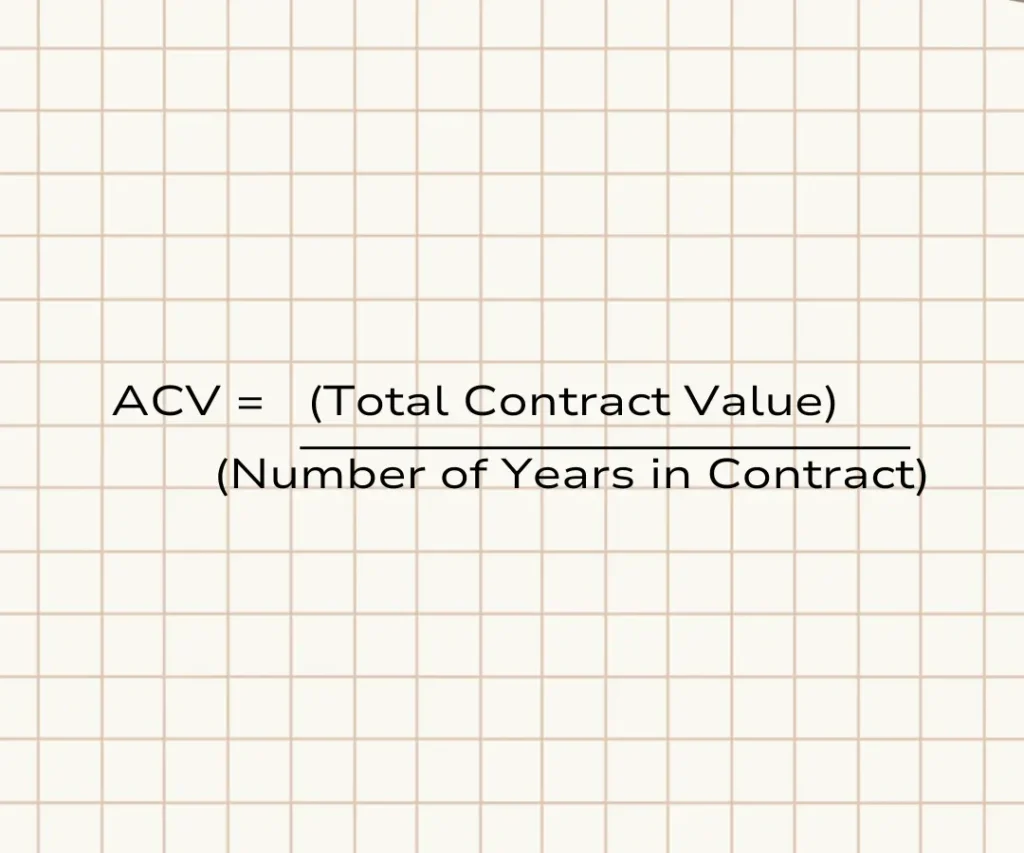
For instance, if a customer signs a three-year contract worth $30,000, the ACV for that customer would be $10,000 per year.
Now let’s look at a more comprehensive calculation.
You’re dealing with three hypothetical clients:
To determine the Annual Contract Value (ACV), we divide the Total Contract Value (TCV) by the total number of years in each contract. When there are multiple clients, we only consider the contracts that are active during that specific year.
In the first year, all three clients are active, and they are all making payments.
Year 1: ($50,000 + $40,000 + $30,000) / 3 = $40,000
So, the ACV for Year 1 stands at $40,000.
Moving to Year 2, customer 1 is no longer part of the contract, so we exclude them from Year 2’s ACV calculation.
Year 2: ($40,000 + $30,000) / 2 = $35,000
Hence, the ACV for Year 2 amounts to $35,000.
As for Year 3, only Customer 3 remains.
Year 3: $30,000 / 1 = $30,000
ACV isn’t just another acronym in the world of sales; it holds significant importance for several reasons:

Image: Leeloo Thefirst
ACV data helps businesses set the right price points for their products or services. By understanding the average annual value a customer brings, a company can determine how much they can afford to charge while remaining competitive.
Accurate ACV calculations enable businesses to project their future revenue streams. This information is invaluable for financial planning, budgeting, and making informed decisions about scaling operations.
Businesses can categorise their customers based on ACV. This segmentation helps tailor marketing and customer support efforts to specific customer groups, ensuring that resources are allocated effectively.
ACV can reveal insights into customer retention and churn rates. If the ACV of newly acquired customers is significantly lower than that of existing ones, it may indicate a higher churn rate.
Investors often scrutinise a company’s ACV when evaluating its growth potential. A strong ACV can be an indicator of a healthy customer base and growth prospects.
Several factors can influence a company’s ACV:
The way a business structures its pricing, such as offering discounts for longer contracts, can impact ACV.
Successfully upselling or cross-selling products or services to existing customers can increase their ACV.
High customer churn rates can lower ACV, as fewer customers are contributing to annual revenue.

Image: Cytonn Photography
Businesses with strong customer retention strategies tend to have higher ACVs.
Effective sales and marketing efforts can attract higher-value customers, thereby increasing ACV.
Now that we understand the importance of ACV let’s explore how businesses can leverage this metric to foster growth:

Image: rawpixel.com
Armed with ACV data, businesses can fine-tune their pricing strategies. They can identify opportunities to increase prices without alienating customers or consider offering discounts for longer contracts to boost ACV.
A high churn rate can erode ACV. By focusing on customer retention through exceptional service and value delivery, businesses can maintain higher ACVs.
Businesses can use ACV to create targeted marketing campaigns. Higher ACV customers may receive more personalised offers, while lower ACV customers could benefit from promotions to increase their spending.
A strong ACV can be a powerful selling point for attracting investors. It demonstrates the potential for consistent, predictable revenue growth.
Calculating ACV and using it effectively can be a complex endeavour, especially for small businesses.
That’s where SalesWorks comes in. With over 25 years of experience in the sales industry, you can rest easy as we offer professionals with extensive expertise in sales and financial analysis, including ACV calculations. Looking for face-to-face sales support as well?
Contact us to explore how SalesWorks can help you achieve sales excellence through our decades of expertise!
